Waste Speaker: Reimagining Sound Through E-Waste
Teodor Mlynczyk and Daragh Byrne (2024)
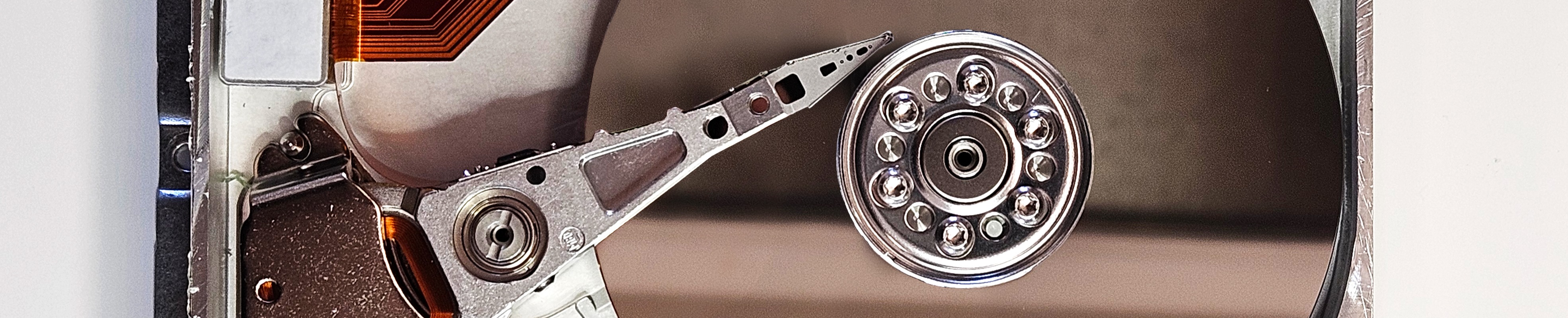
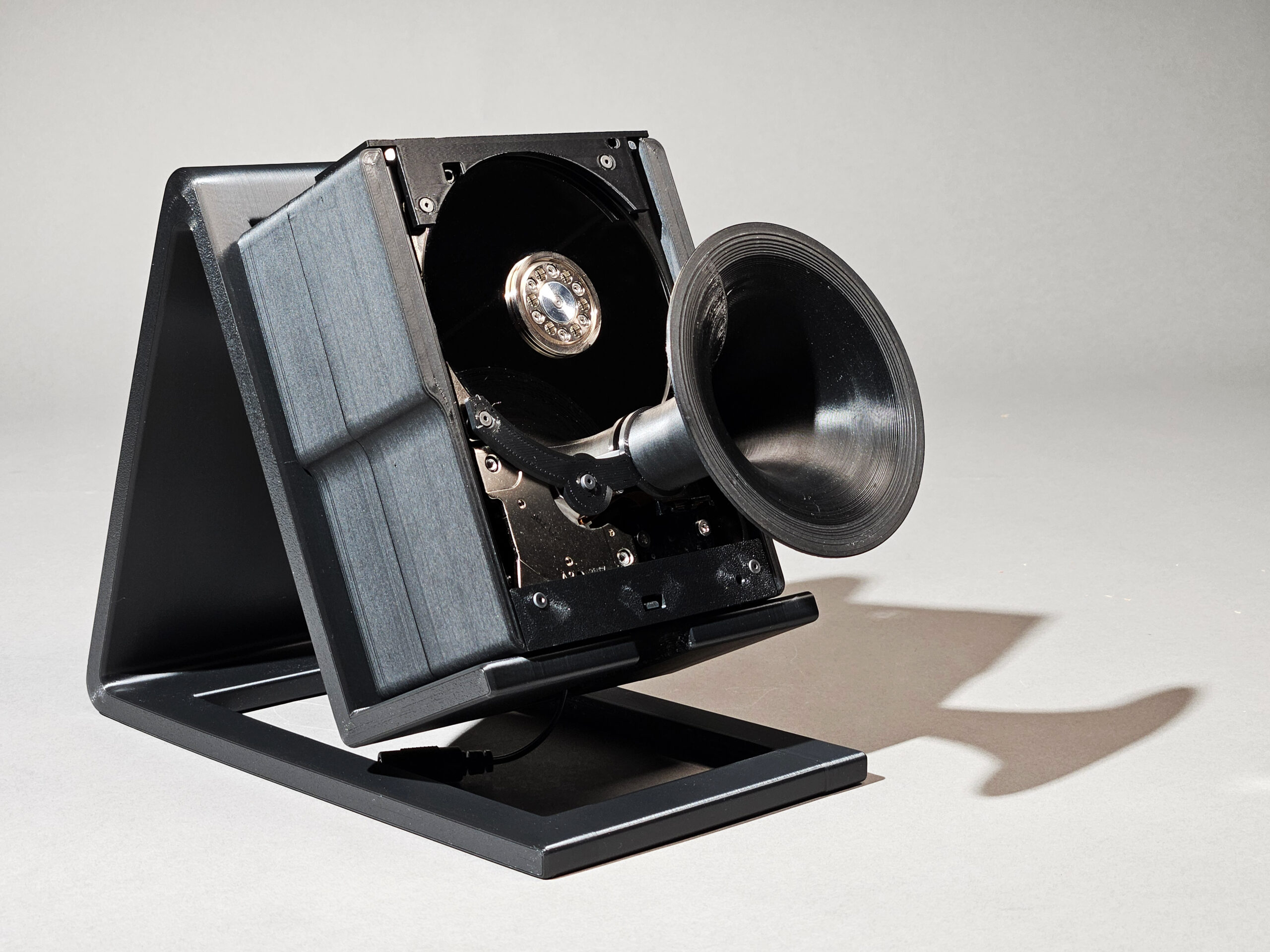
The Waste Speaker is a creative application of e-waste driven design, utilizing the voice coil of discarded hard disk drives to act as an analog noisemaker. This version created by Teodor Mlynczyk with advising by Daragh Byrne, played back compositions reflecting the types of files left behind on these discarded storage devices, named “data sonification” by Teodor.
(The text below is an excerpt from a paper submitted by Teodor Mlynczyk and Daragh Byrne to ACM Association for Computing Machinery)
The rapid pace of technological development over the past several decades has led to an exponential rise in electronic waste, or “e-waste.” As devices become obsolete through cycles of innovation and planned obsolescence, the data once contained on these devices fades into obscurity. This project situates itself within ongoing discourses of material circularity and archival media, asking how obsolete technologies might experience renewal in new and creative forms. Specifically, this research explores the intersection of electronic waste, data sonification, and reuse through the design and development of Waste Speaker, a hand-held audio device built from discarded hard disk drives (HDDs). By translating latent data stored within these HDDs into generative sound compositions, Waste Speaker reconfigures the hard drive as both a medium and message of revival. In doing so, this project contributes to broader conversations around defunct media and sustainable design, positioning e-waste as a site of resurgence: no longer “waste,” and instead a medium for sensory engagement and critical reflection.
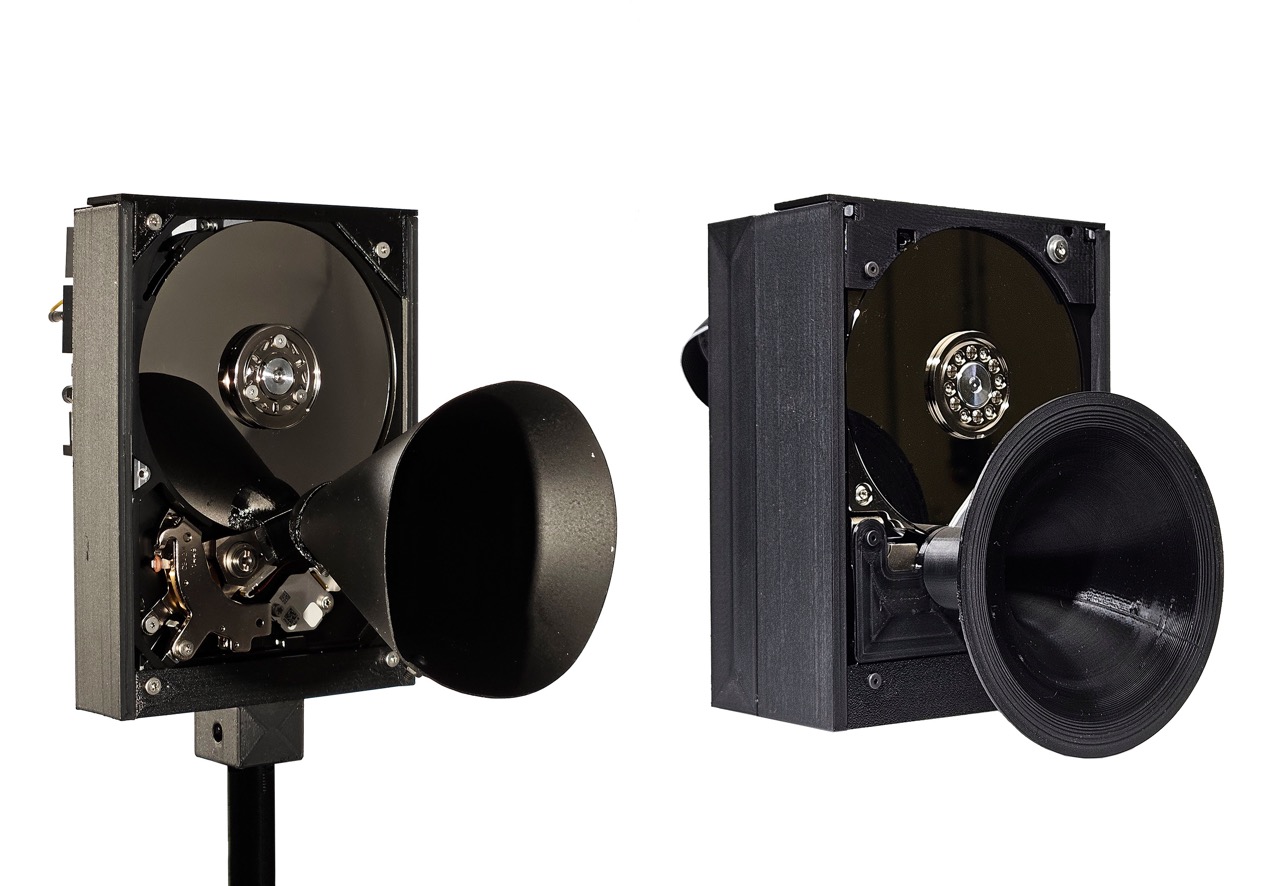
As an ongoing design and artistic research project, this work serves as both a prototype and a formwork for continued explorations in sound design, embodied interaction, and user experience with waste and defunct media. Future work could expand upon the experience through movement and bodily engagement, multi-speaker arrangements, and new modes of sound creation. As a handheld (or mounted) device, integrated sensors such as proximity, touch, or accelerometers could enable the sound to dynamically adapt in response to how it is held, moved, or approached, deepening the sense of tactile and embodied interaction. The spatial and experiential configuration of the device also invites further study: how might multiple speaker units harmonize or respond to one another, or how might haptic feedback create a more immersive audio experience? Finally, the sound generation system itself offers additional possibilities for exploration, ranging from comprehensive data sonification that transforms an entire device’s contents into a “soundtrack,” to audio generation that focuses on spoken-word compositions, potentially transforming files with text into generative poetic soundscapes.
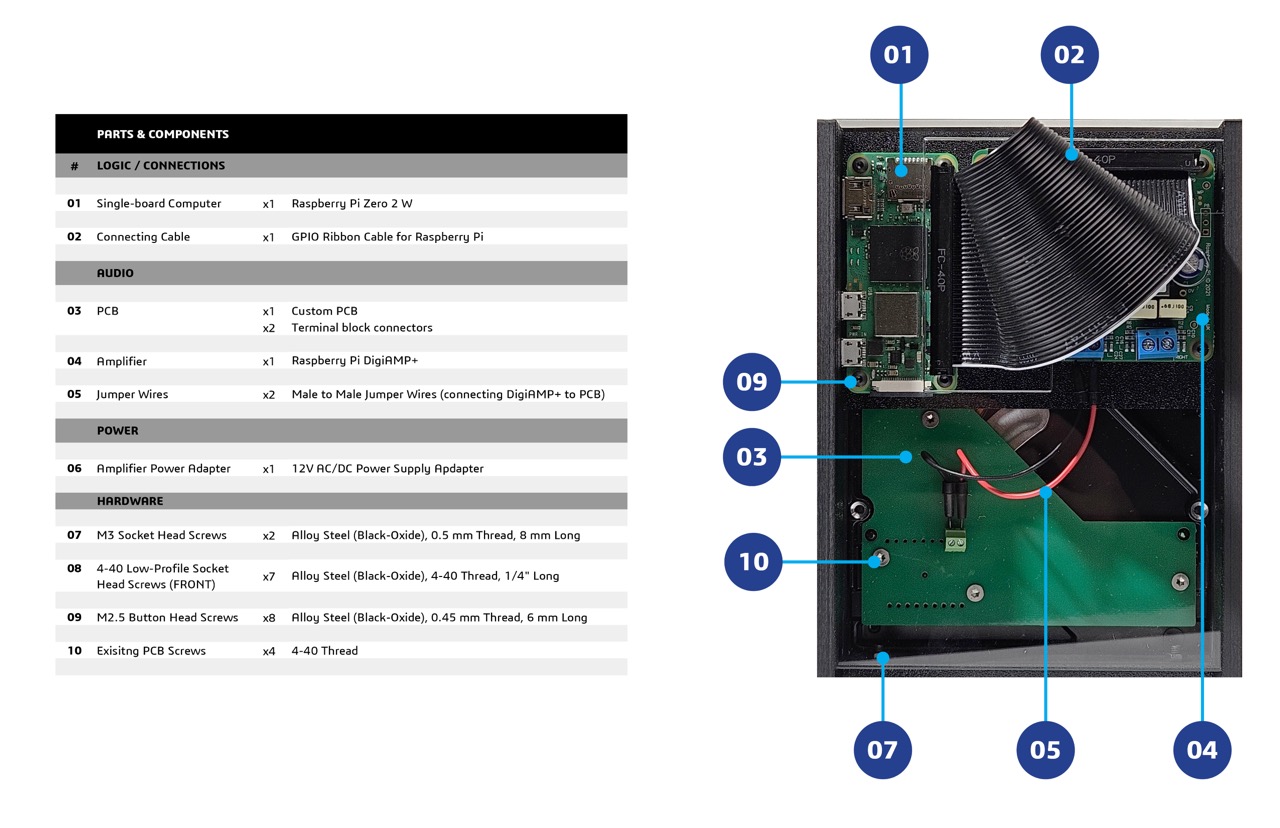
In addition, a goal of this project is to make Waste Speaker available to others to reuse, adapt and expand upon. By releasing the 3D models, electronic specs, and generative scripts as open-source resources, we plan to stimulate creative experimentation with the possibilities of and for defunct and obsolescent devices. This approach frames obsolete technologies not as endpoints, but as sites of renewal through which new tangible possibilities and creative practices can emerge. As hard drives and other outdated storage devices are relatively affordable and accessible through websites like eBay, Waste Speaker could act as a starting point that many others build upon and reinterpret.