Bioplastic Explorations in Color, Light, and Form
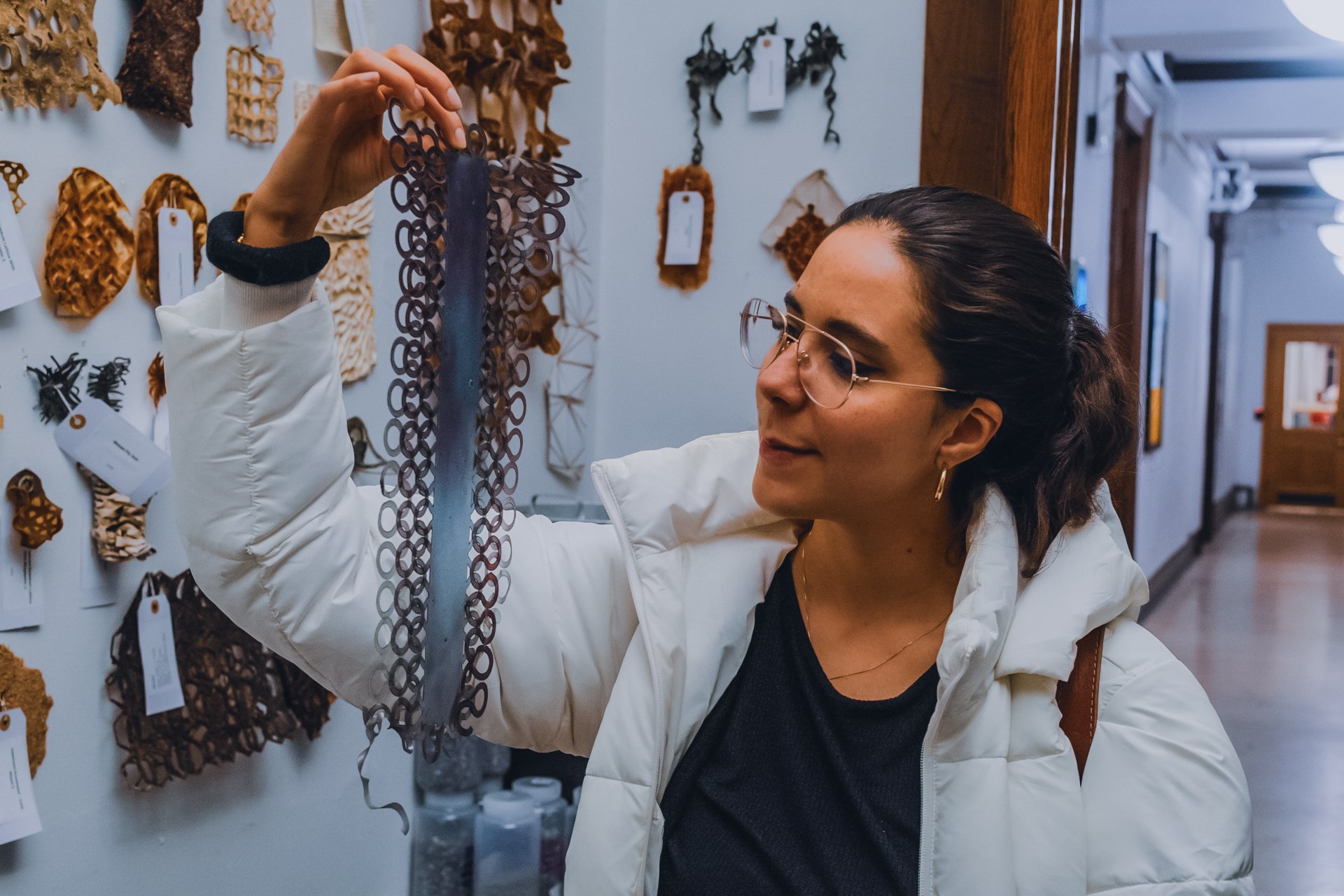 This project investigates sustainable biomaterial creation through two primary research questions: What material behaviors and aesthetic qualities distinguish bioplastics from conventional materials, and how can these unique properties be leveraged in artistic practice? And how can timelapse documentation reveal and enable the choreography of bioplastic transformations over time?
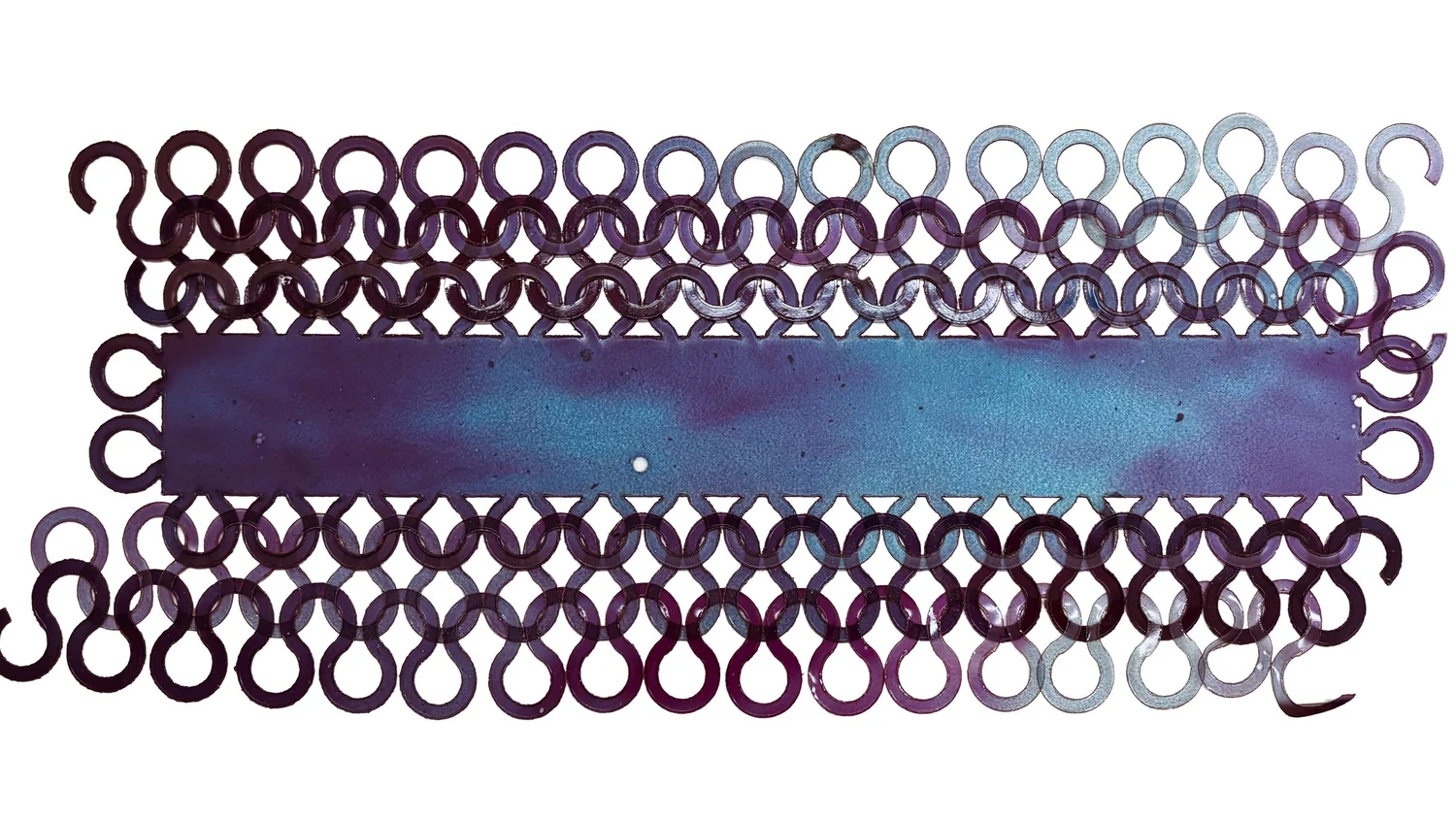
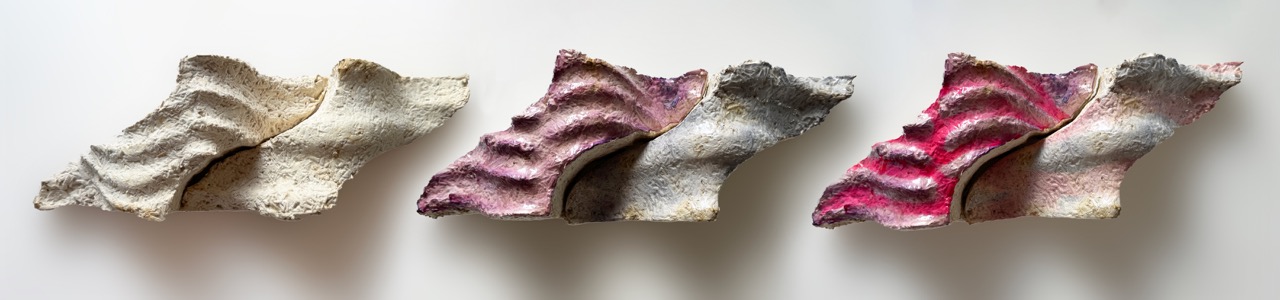
Building on initial explorations from Fall 2024 when I was taking Dana Cupkova’s “Shaping Environments” course, I’ve developed techniques for creating large-format, organically-colored bioplastic sheets with marbled effects. Working with gelatin-based bioplastics and natural pigments including blue spirulina and red cabbage powder, I laser cut and assemble these sheets into woven structures. Completed works include “Woven Lattice in Spirulina Blue” (2025) and the “Cabbage-Spirulina Marbling” series (2025).
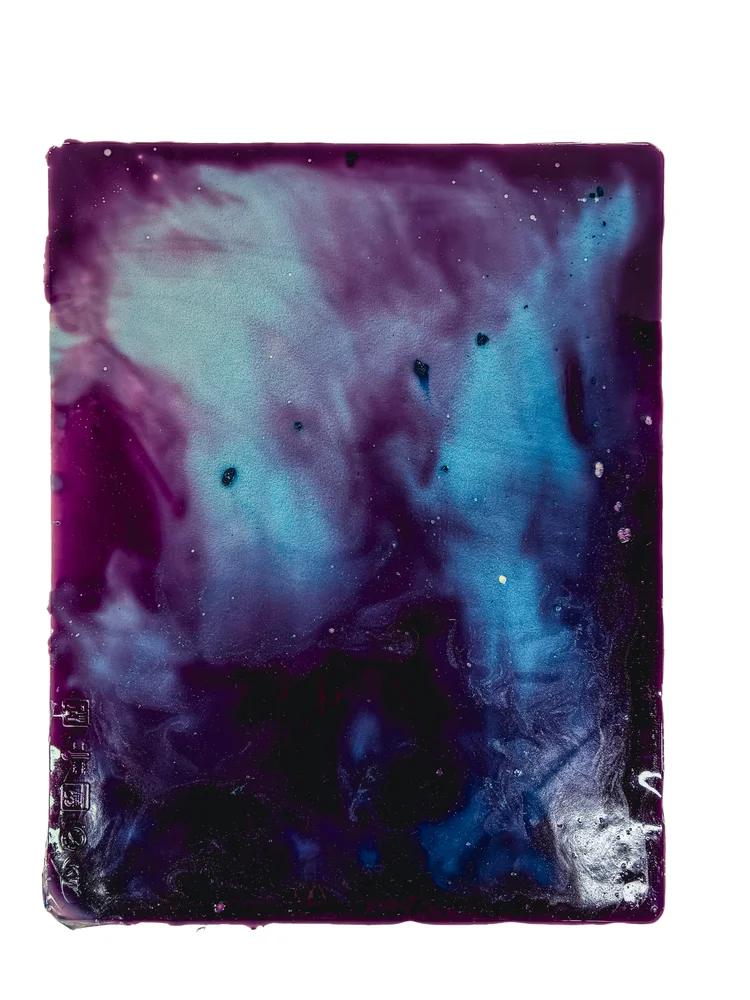
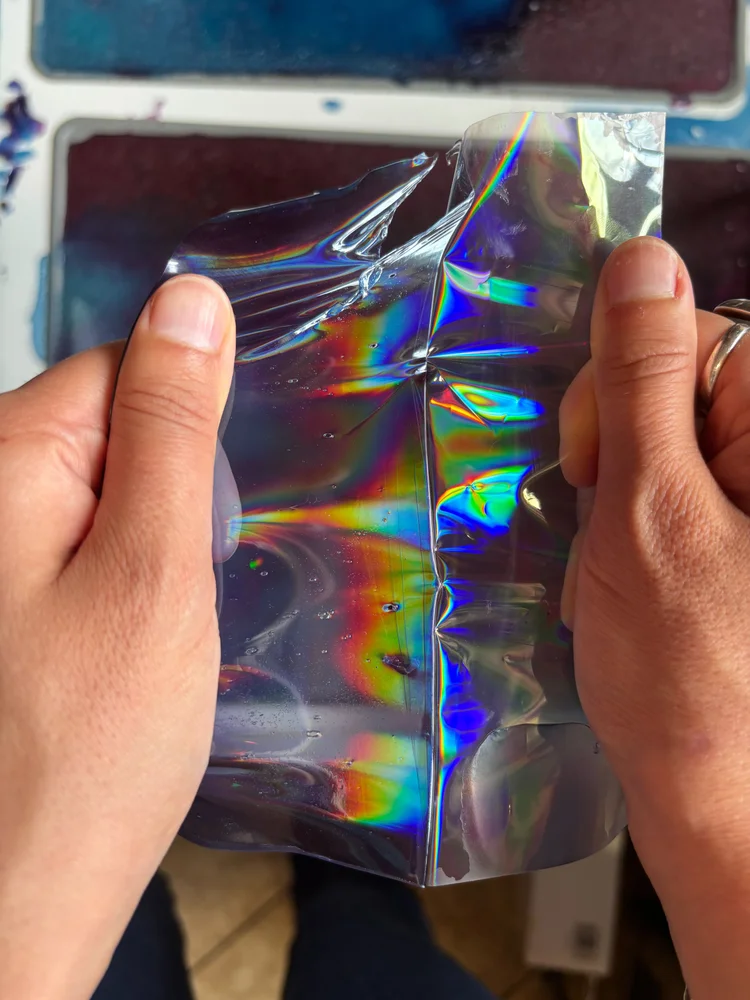
A significant material discovery involved casting bioplastic onto holographic sheets to produce holographic bioplastics, a technique inspired by industrial holographic chocolate manufacturing. “Holographic Diffraction Study No. 1” (2025) demonstrates how this process creates unique light interactions, opening new aesthetic possibilities for biodegradable materials that warrant further investigation.
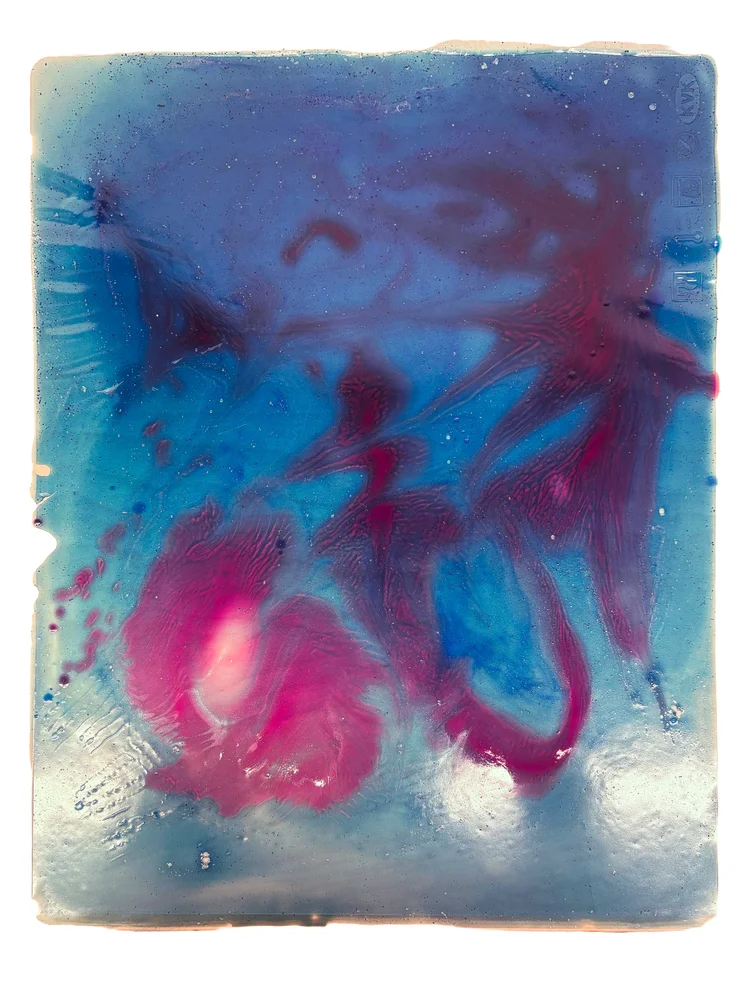
In collaboration with dFAB Lab technicians, Nirmal Kumar and Terry Hritz , I found safe protocols for laser cutting bioplastics. This method significantly reduces material waste and production time compared to casting bioplastics into pre-cut molds while expanding possibilities for color exploration, marbling techniques, and assembly.
Ongoing research includes timelapse documentation of the drying process to better understand and predict material behavior, potentially enabling designs that intentionally incorporate transformation as an aesthetic element. This work positions biomaterials as substances with unique temporal and aesthetic qualities rather than mere substitutes for conventional plastics, contributing to broader investigations at the intersection of craft, ecology, and material innovation.
This project was made possible with support from the Frank-Ratchye Further Fund Grant #2025-066.