City After Abundance
Somin Ella Moon (2026)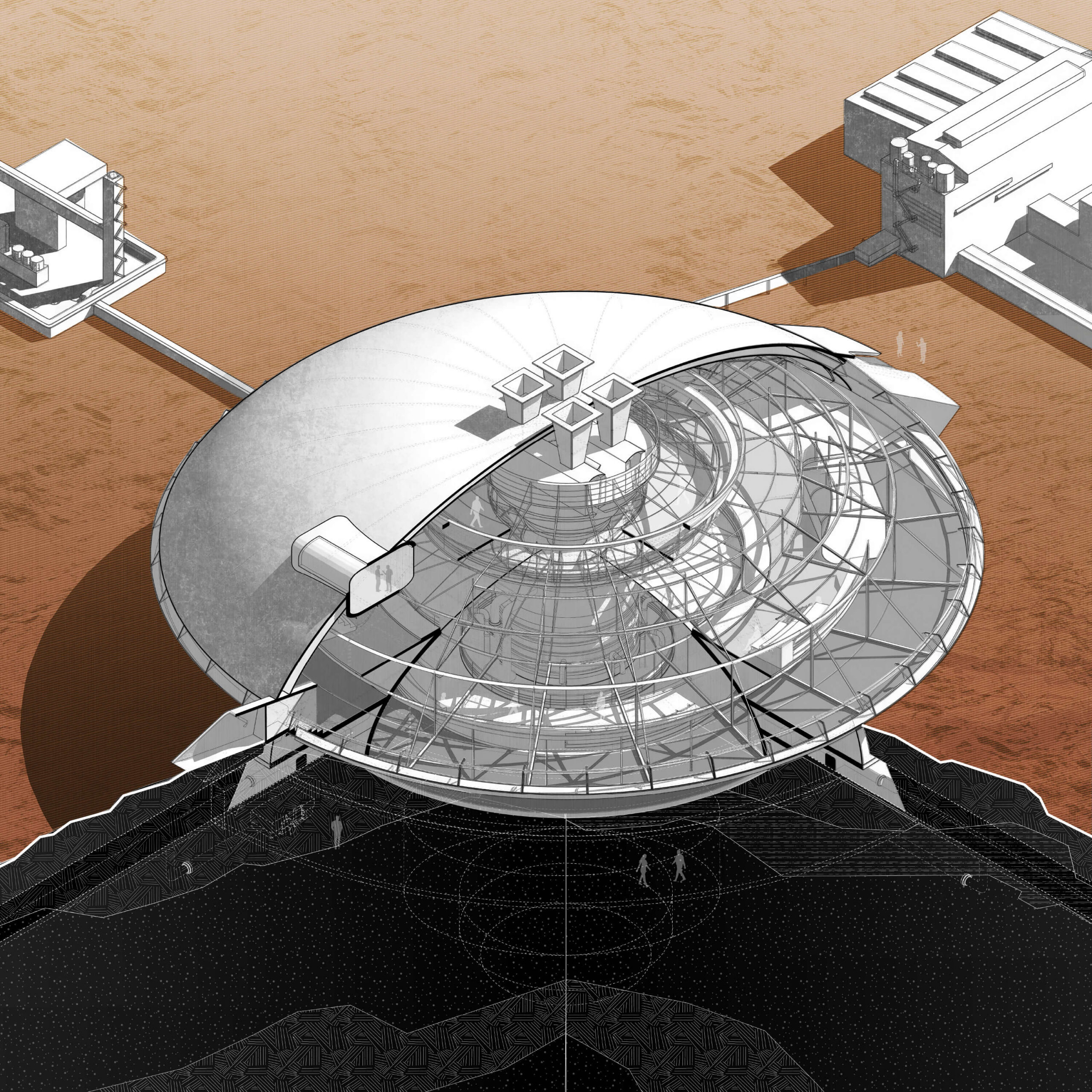
Mars is often imagined as a place to begin again, a hostile yet familiar horizon where Earth’s systems of extraction and exclusion can be left behind. City After Abundance resists this fiction. It asks instead: how do we design for life when there is nowhere left to escape to?
Mars is the only extraterrestrial body in our solar system imagined as inhabitable rather than merely occupiable. Its day-night cycle, geological evidence of past water, and six-month proximity to Earth make it simultaneously familiar and unforgiving, an ideal site for architectural inquiry that demands permanence and collective life rather than temporary habitation. But an extraterrestrial environment like Mars requires more than technical inquiry. It demands a re-reading of architectural logic: not only in terms of performance, but in terms of what that logic has historically enabled and destroyed on Earth.
Mars intensifies consequences that Earth normalizes: territorial expansion that consumes ecosystems, extraction without regeneration, the quiet destruction of the natural systems that sustain life. In a closed and fragile habitat, these logics cannot remain unchecked. On Mars, there is no invisible labor to absorb risk, no externalized environment to receive waste. Architecture is no longer background.
Architecture becomes the condition of life itself, shaping how people move, relate, and endure together, directly determining individual psychology, communal relationships, and the social structures required for collective survival. This project does not propose Mars as a solution. Instead, it uses Mars as a speculative lens through which a damaged Earth can be re-read and questioned, exposing the fragilities of life here while asking how architecture can mediate care and governance when permanence and interdependence are unavoidable. Certain constants of human nature will persist across any timeline: the need for social connection, movement, nourishment, culture, and community. Designing for life on Mars means designing for these needs under radical constraint, examining how architecture can sustain psychological comfort, social cohesion, and ecological balance when there is no margin for error.
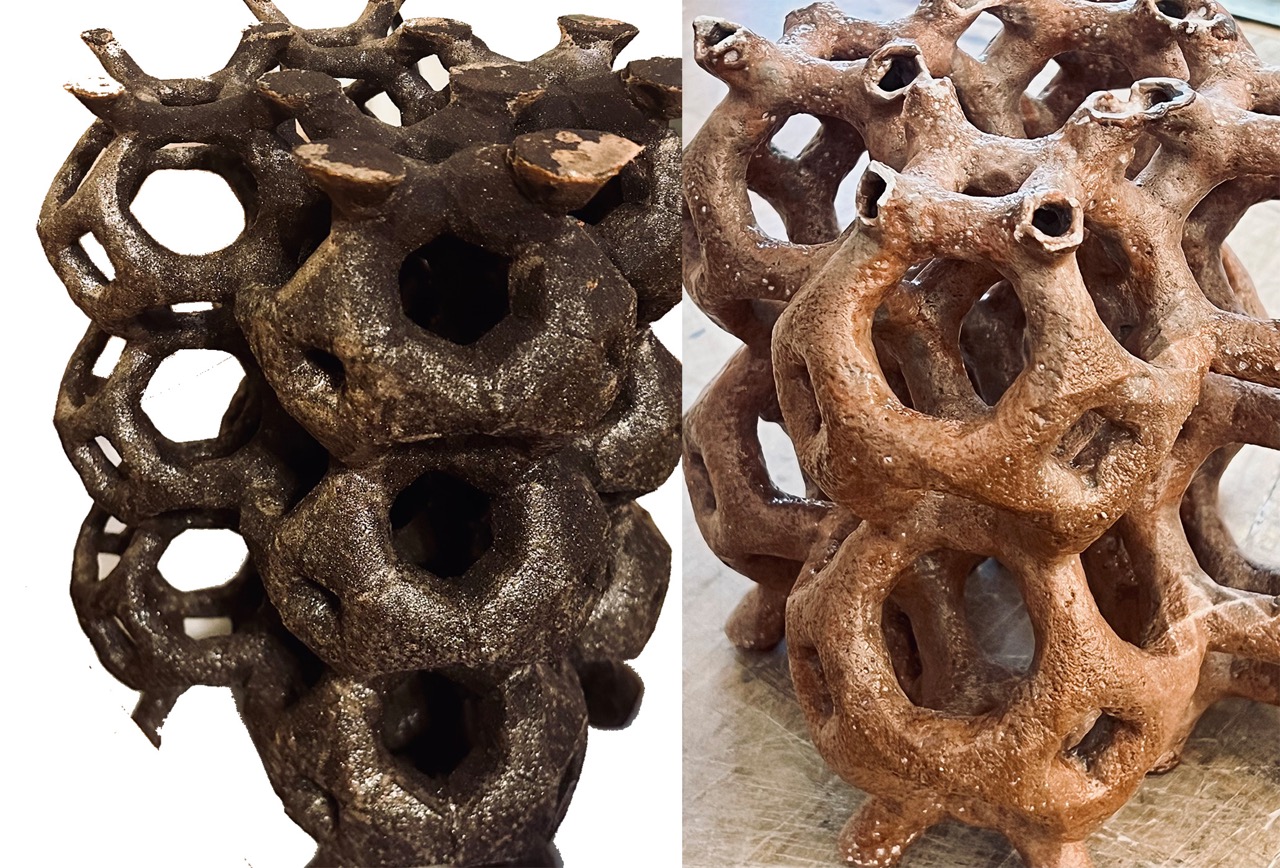
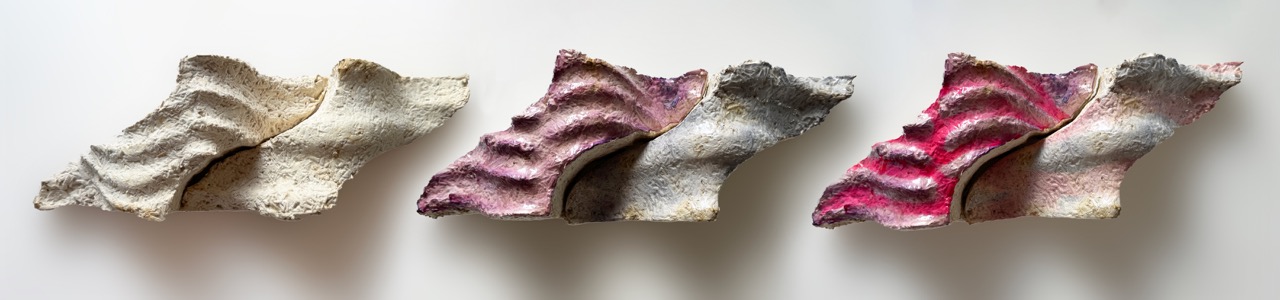
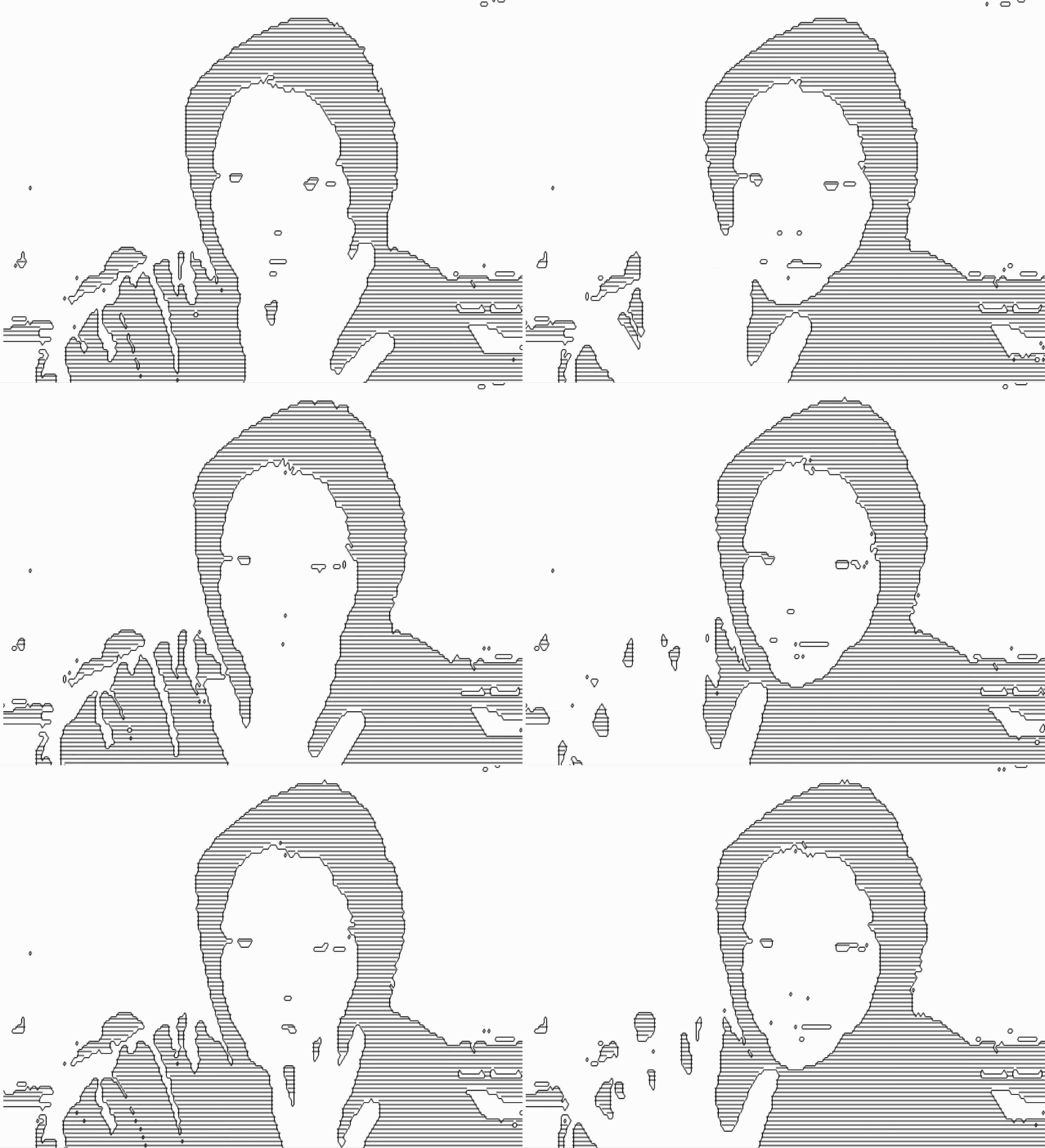
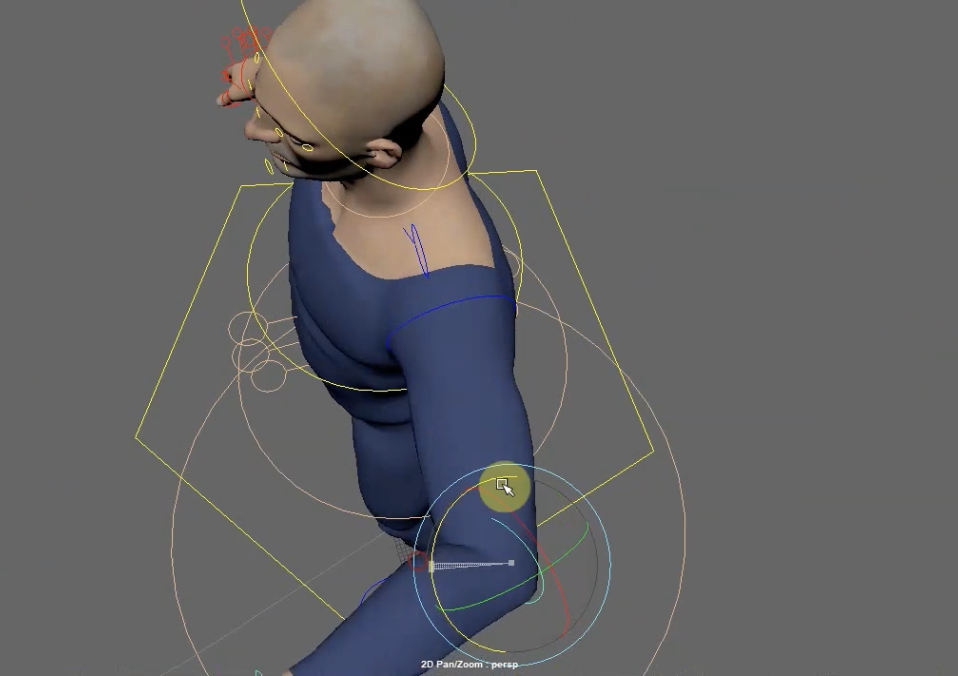
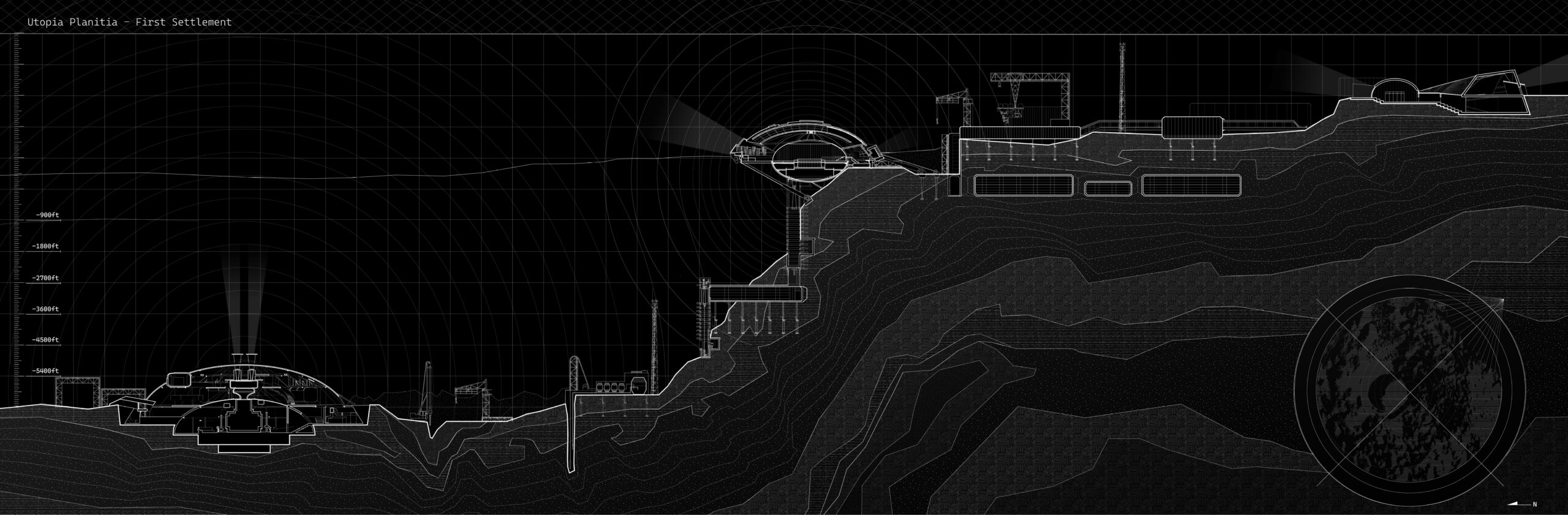
Through speculative modeling, virtual reality-based testing and experimental prototyping, the thesis examines how, given these limitations, spaces can foster psychological wellbeing over long periods of time, and how habitats can expand while maintaining social cohesion and ecological balance. Through three scenes of everyday Martian life, at both housing and community scales, the project builds toward a prototype settlement.
Not a blueprint, but a speculative ground. One possible framework among many, shaped as much by what we hope to become as by what we have not yet managed to leave behind.
This project has been made possible with support from the Frank-Ratchye Further Fund Microgrant 2026-080. See Additional images here.