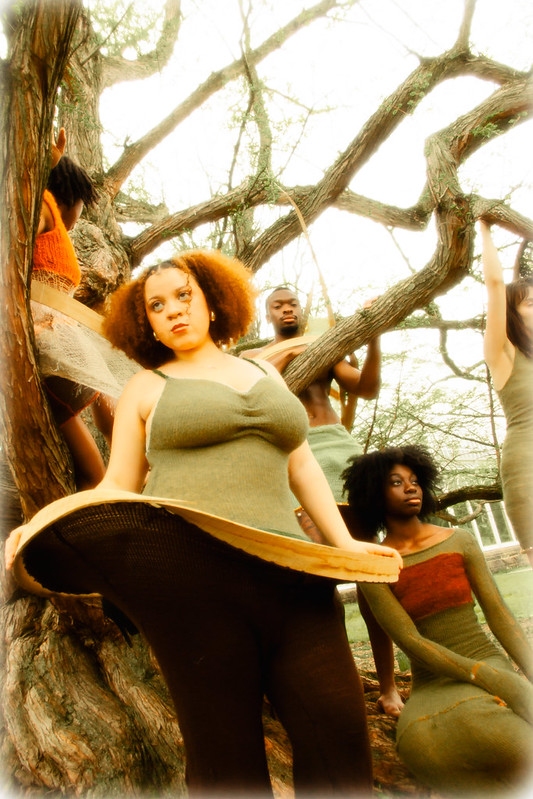
A Rose with Its Role to Play
(2025)
“A Rose with Its Role to Play” is a collaborative short film by Logan Larsen created with his husband, Alexandre Pepin, over the course of a week. The film reconstructs a bedroom set from Jean Cocteau’s 1946 film “La Belle et la Bête” (“Beauty and the Beast”), restaging the rapid construction, filming, and dismantling of the scenic environments that shaped the original production.
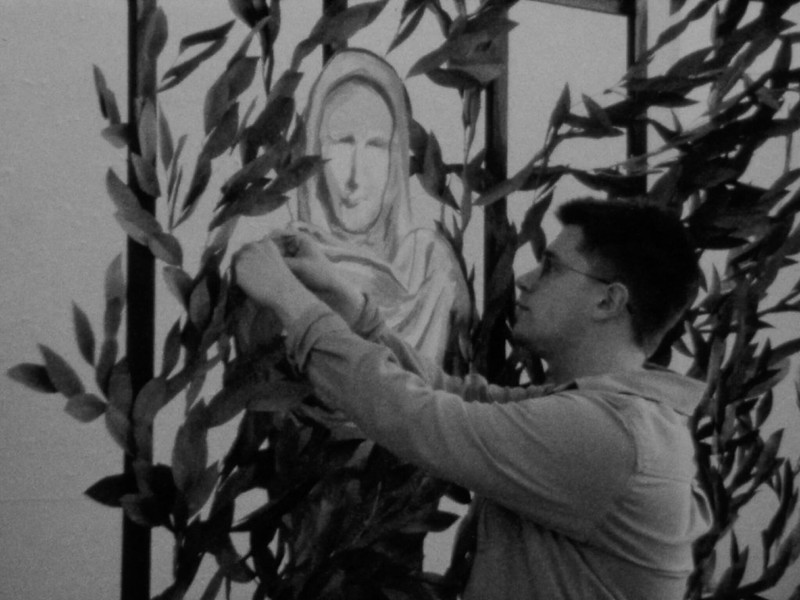
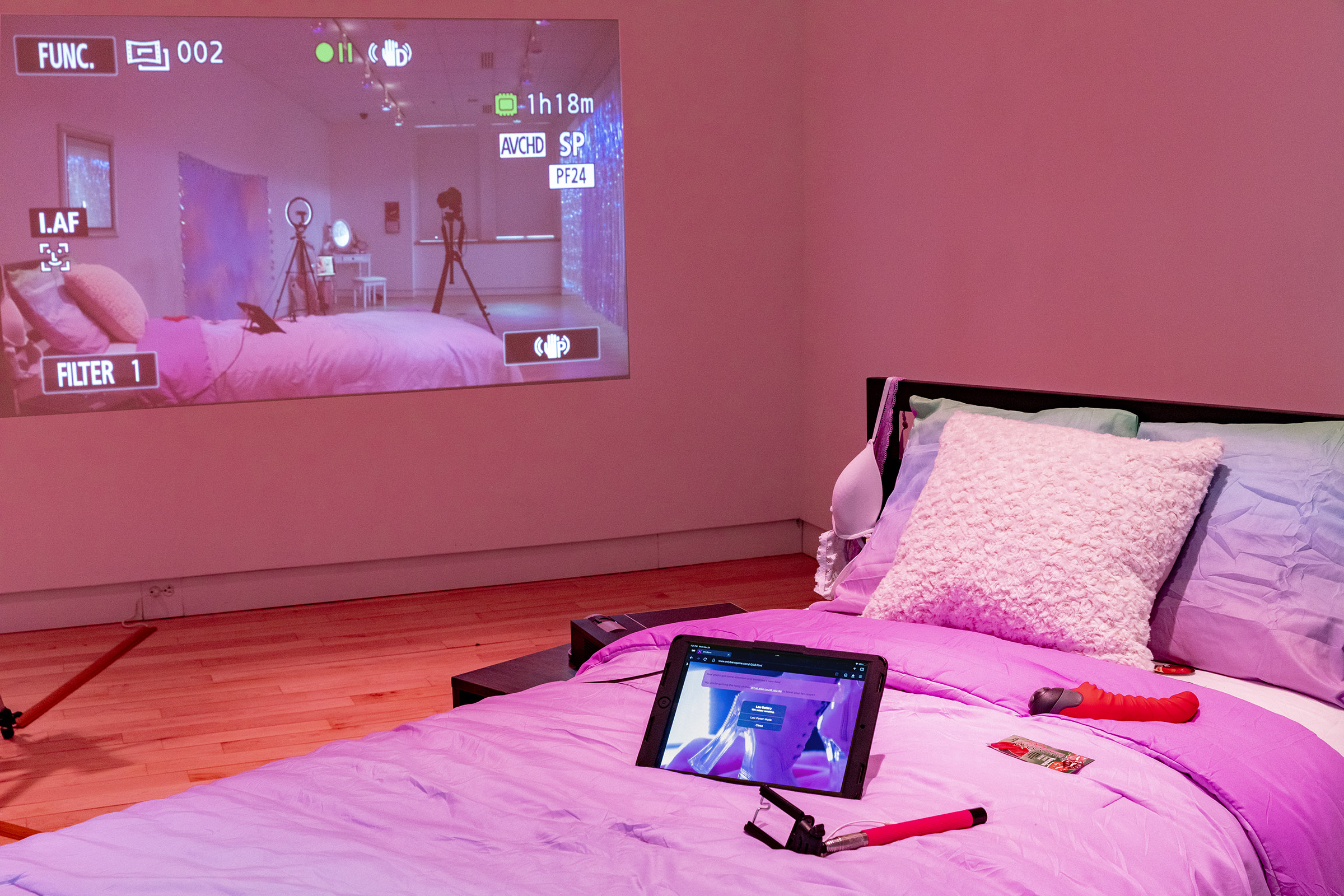
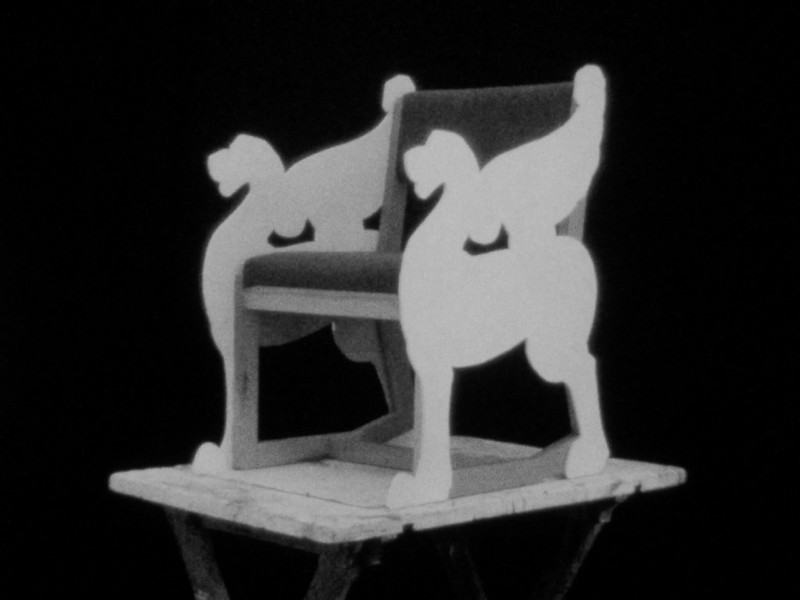
Together, they created a series of props, reconstructed Belle’s bedroom, and filmed the work within the resulting framework. The film is intended to be presented as a multichannel installation within an approximation of the set itself, inviting viewers to cohabitate with the space as both spectators and participants.
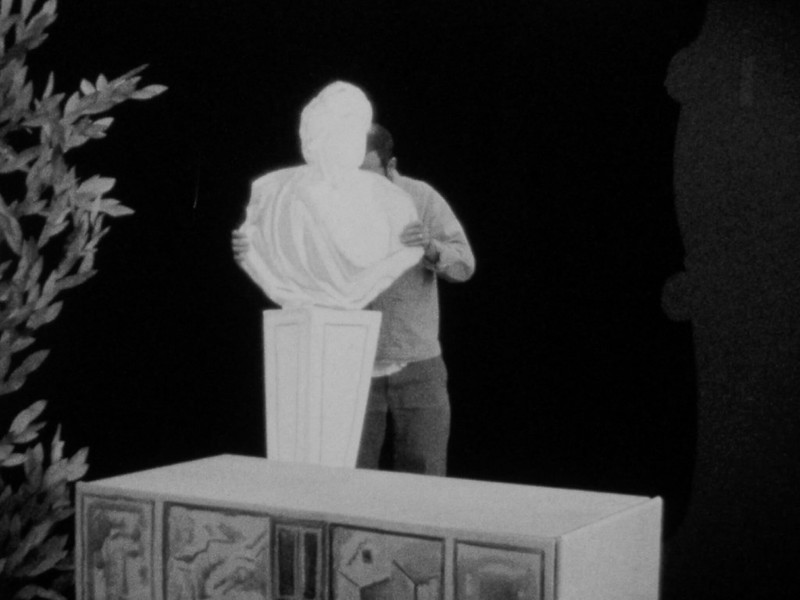
The project emerges from Larsen’s ongoing interest in looking beyond the frame of early cinematic productions: toward the hidden hands, quiet labor, and often-unnamed collaborators who helped construct the images we consume. He imagines himself sitting at the edge of the camera’s viewfinder, just out of sight, witnessing the work of stagehands, designers, costumers, and other makers who build the image for the camera. From this position, he looks for traces of a bygone queer laborer, someone whose contribution may have disappeared from the official record but remains embedded within the image.
“La Belle et la Bête” is vital to this project because of the intimate, queer collaboration between Cocteau and his muse, Jean Marais, who played the Beast. Larsen read the film as a love letter coded through its making: an intimate exchange between director and star, sustained and made possible by the collective labor of its production. By reconstructing one small part of that cinematic world, “A Rose with Its Role to Play” attempts to make visible the labor surrounding the image, while imagining the queer histories that might still linger just beyond its frame.
List of Collaborators:
Alexandre Pepin
Links to websites:
https://www.loganlarsen.com/
This project was made possible with support from the Frank-Ratchye Further Fund #2026-012. Additional images available here.